Key findings
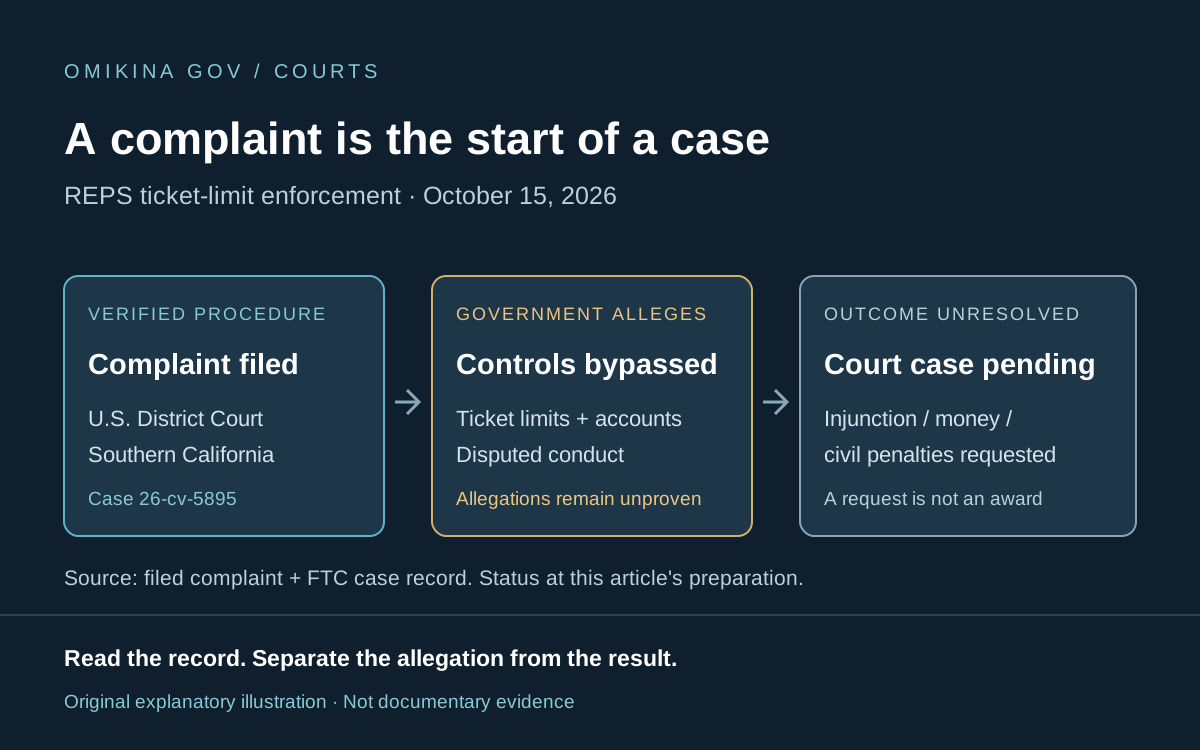
- An October 15 civil complaint is filed; the FTC lists the REPS case as pending.
- The government alleges more than 18.5 million tickets in the described over-eight-ticket event subset.
- Injunctions, monetary relief and penalties are requested, not established outcomes.
What remains open
- What evidence and defenses will the parties present about the alleged circumvention of issuer controls?
- Will a later ruling or entered resolution establish liability, remedies or a consumer recovery?
A filing with consequences still to be decided
The United States filed a civil complaint against ticket broker REPS & Company and three executives on October 15 in the Southern District of California, following a Federal Trade Commission referral. The FTC case record identifies the proceeding as 26-cv-5895 and lists it as pending. The verified change is the filing of an enforcement case; the records reviewed do not establish a judicial finding against the defendants. [1] [3]
The complaint alleges violations of the Better Online Ticket Sales Act and the FTC Act. Its requested remedies include a permanent injunction, monetary relief and civil penalties. Those requests describe what the government wants the court to order. They do not establish that an injunction has issued, a penalty has been imposed or consumers have received compensation. [1]
What the large numbers do and do not measure
Paragraph 19 alleges that REPS bought more than eight tickets for at least 83,500 events, spending over $1.3 billion to acquire more than 18.5 million tickets for those events and making at least $120.8 million in resale profit. These are the government’s pleaded purchase and profit figures. The paragraph separately describes more than 18.6 million tickets overall since 2022, so the two ticket totals should not be used interchangeably. [1]
Our reading is that the figures establish the scale of the government’s allegation, while leaving important measurement questions open. Purchase spending is not a court-assessed consumer loss, and alleged resale profit is not an awarded penalty. The prayer for relief does not set a specific dollar award. Treating any of these figures as money already recovered would turn an allegation into an outcome the filing does not show. [1]
The legal theory connects controls to purchasing behavior
As described in paragraphs 14–17, the BOTS Act addresses circumvention of technological controls used to enforce posted ticket limits or purchasing rules, and certain sales of tickets obtained through that circumvention. The complaint therefore links the alleged conduct to specific controls rather than relying only on the size of the resale business. This is an explanation of the government’s legal theory, not a prediction that it will prevail. [1]
The government alleges that the defendants used numerous accounts, payment credentials and tools that concealed account users’ identities or locations to get around issuer controls. It also alleges that issuers blocked or canceled purchases and that REPS adapted its practices in response. Those assertions matter because the complaint connects the disputed purchasing conduct to controls allegedly intended to prevent it. The underlying company records have not been independently authenticated by this desk. [1]
Our analysis is that the useful accountability question is how the evidence connects each alleged workaround, the relevant issuer control and the tickets obtained. A large purchase count alone cannot answer that question. The complaint supplies the government’s account of those connections; the FTC’s announcement and case listing confirm the agency’s position and procedural status, rather than providing an independent judgment on disputed facts. [1] [2] [3]
What to watch in the next public record
The next material development would be a publicly available defense response, substantive court ruling or entered resolution that changes the pending posture. The case page reviewed for this article lists the October 15 complaint. This bounded review did not obtain a defense filing, settlement or merits ruling, and it cannot describe the defendants’ response. A later record should be read against the actual relief requested here before calling the case a recovery or enforcement success. [3] [1]
The evidence file
Sources & evidence
Read the original records behind this analysis. Dates below distinguish publication from retrieval.
Filed October 15, 2026. Retrieved October 15, 2026.
- FTC Sues Ticket Broker Over Unlawful Tactics Used to Buy Millions of Tickets to Popular Live Events ftc.gov
Published October 15, 2026. Retrieved October 15, 2026.
Record updated October 15, 2026. Retrieved October 15, 2026.
How this article was prepared
AI assisted the research and writing of this original analysis. It is grounded in the linked public sources. Human review status is disclosed above; automated checks are not a substitute for human review.
Editorial standardsCorrections policy