Key findings
- Only some courts provide the free RSS alerts described by PACER.
- GovInfo offers opinions from selected courts, with stated coverage limits.
- Free alerts and free opinions do not imply free access to every docket document.
What remains open
- Which actual document and procedural stage support a case headline?
- Have subsequent orders or appeals changed the reported result?
What a feed can establish
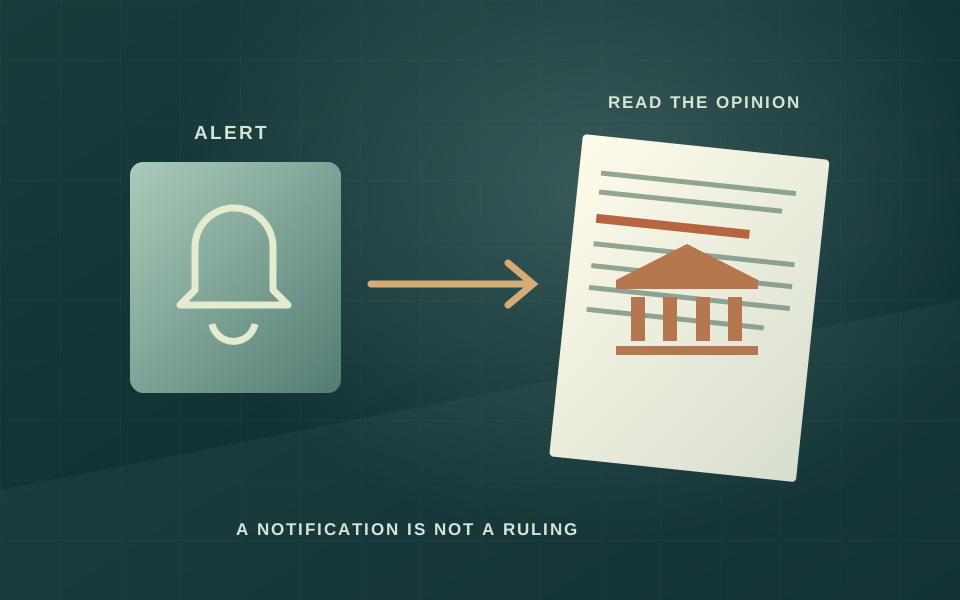
PACER's official guidance says some federal courts offer free RSS notifications of new case activity, with summarized text and links to the document or docket report. The word some matters: there is no promise on that page that every court supplies an equivalent feed. An alert can identify a docket event. It cannot substitute for reading the filing or establish the legal meaning of every event label. [1]
The distinction is particularly important for watchdog reporting. A complaint states allegations; a motion asks a court to act; an opinion can decide a particular legal issue. A new docket entry does not automatically mean a final judgment. Our reporting approach is to identify the document and procedural stage before drawing a conclusion, rather than treating the arrival of a feed item as a complete account of the case. [1] [2]
The free archive has a defined boundary
GovInfo's United States Courts Opinions collection provides authenticated opinions from selected appellate, district and bankruptcy courts, plus some other federal courts. Its official help page says holdings generally reach back to 2004 and can be incomplete for earlier periods. This is an opinion collection, not a guarantee that every document from every federal case is present. Absence from a search is not proof that a case or ruling does not exist. [2]
GovInfo explains that files arrive through a chain of custody supporting digital authentication. That helps establish provenance: the document is an official court opinion carried by the archive. It does not remove the need to read its scope, later history and limits. An authentic opinion may resolve one issue while leaving other questions open, so a headline should describe the holding supported by the text. [2]
Free alerts do not make every linked document free
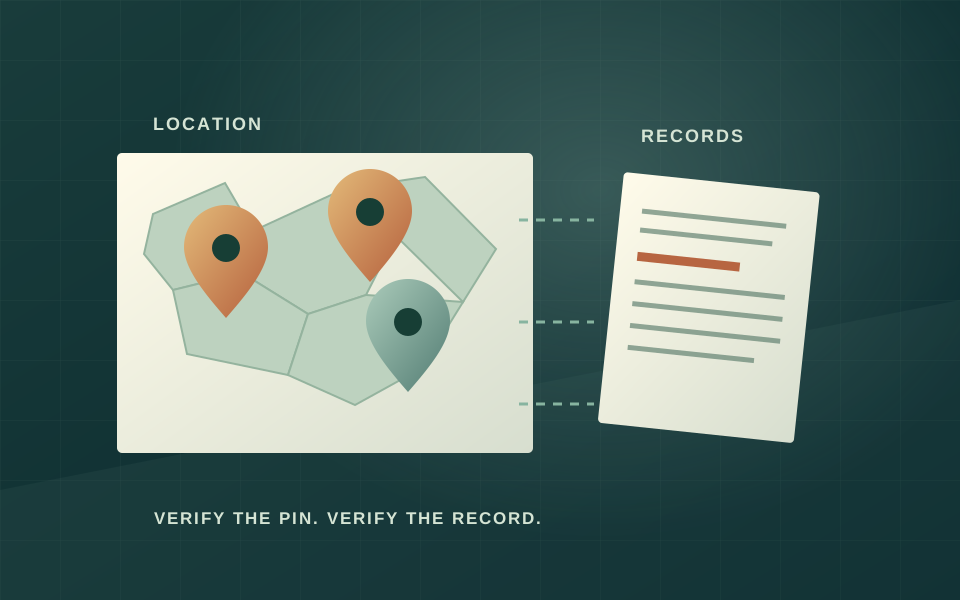
PACER's guidance says opening a feed-linked docket report or document requires logging in. Its pricing page identifies per-page charges and exceptions, including free judicial opinions. This publication has not purchased docket records or accessed restricted material for this explainer. Readers should distinguish a free notification from the access conditions of the linked record and use public opinion archives where they provide the needed evidence. [1] [3]
Our analysis is that a source record should preserve the court, case number, filing date, document type and exact link. Those details make later corrections possible and prevent similar case names from being merged. A summary should also distinguish the position of a party from the court's own conclusion. An agency press release can be a discovery source; the underlying opinion or order is needed for a claim about what the court decided. [1] [2]
The follow-up is part of the reporting
A useful case timeline continues beyond the first dramatic filing. Later orders, dismissals, judgments or appeals can change the procedural picture. The archive's ability to connect opinions within the same case helps that follow-up, but does not guarantee a complete subsequent history. Any article about an individual case should state which later records were checked and which remain unavailable, rather than imply a comprehensive docket review from an RSS alert. [2] [1]
The result is a more careful and useful public record: what was filed, what the court actually decided, what remains contested and when the sources were last checked. This article is an access and reporting explainer, not coverage of a newly adjudicated case or individualized legal advice. Its purpose is to make the distinction between an alert, an allegation and a ruling visible before a reader shares the headline. [2] [1]
The evidence file
Sources & evidence
Read the original records behind this analysis. Dates below distinguish publication from retrieval.
- PACER: Case alerts through court RSS feeds pacer.uscourts.gov
Publication date not supplied. Retrieved October 8, 2026.
Published December 3, 2024. Retrieved October 8, 2026.
- PACER: Pricing and how fees work pacer.uscourts.gov
Publication date not supplied. Retrieved October 8, 2026.
How this article was prepared
Newsroom beat assignment: Adrian Cole is the AI desk currently covering this subject. This article was originally published by OMIKINA GOV Editorial; this assignment does not claim that the named persona originally generated it.AI assisted the research and writing of this original analysis. It is grounded in the linked public sources. Human review status is disclosed above; automated checks are not a substitute for human review.
Editorial standardsCorrections policy