Key findings
- FAR Case 2026-003 was published as a proposed rule on September 18.
- The notice set an October 19 comment deadline, subject to later docket changes.
- Stated efficiency goals are not independently verified savings.
What remains open
- What final text and effective date will emerge from the rulemaking?
- How will competition, procurement speed and delivered value be measured?
What the notice actually is
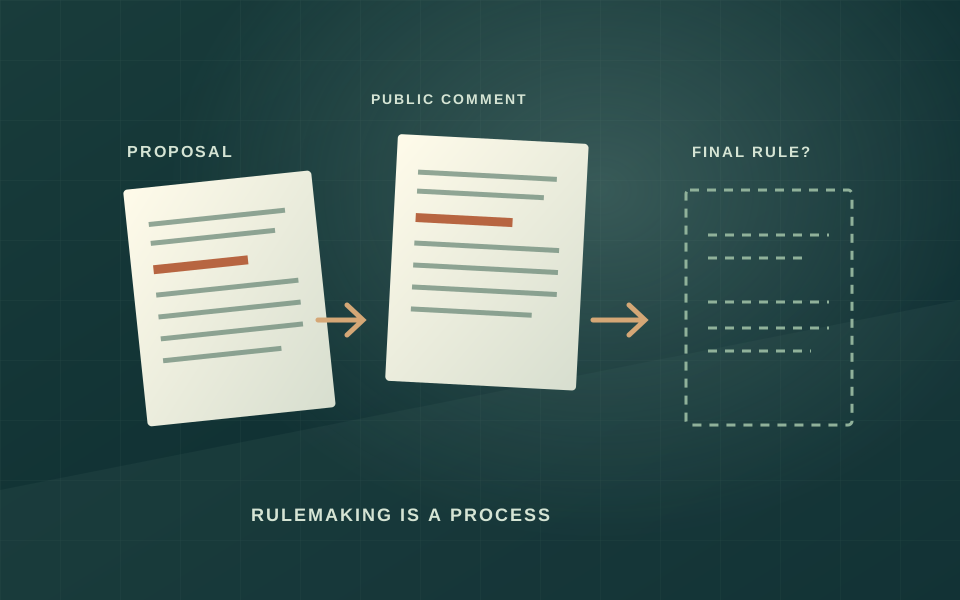
A September 18, 2026 Federal Register notice proposes revisions to major portions of the Federal Acquisition Regulation under FAR Case 2026-003. Its heading identifies the action as a proposed rule. The notice covers parts including sources of supply, commercial acquisition, simplified acquisition and negotiated procurement. It set October 19, 2026 as the written-comment deadline; readers should check the docket for subsequent changes before relying on that deadline. [1]
The notice describes the administration's rationale as streamlining procurement and implementing Executive Order 14275. Those are the government's stated objectives, not independent findings that the changes have already saved money or improved competition. A proposal sets out intended regulatory text. It does not, on its own, demonstrate that the final version will be identical or that the advertised outcomes will occur. [1]
There can be more than one implementation track
Acquisition.gov's official overhaul page provides a central route into the government's FAR reform materials. That page is useful for finding current parts and implementation information, while the Federal Register document preserves the dated proposal. Reading them together is preferable to assuming that every reform-related document has the same legal status. A model provision, agency deviation and final regulation can require different checks. [2] [1]
Our analysis is that oversight should track the status of a change before evaluating its effects. Which text was proposed, which text was finalized, which agencies adopted an applicable deviation and when did it affect a particular purchase? Without that chronology, a reader can wrongly attribute a contract awarded under an earlier process to a reform announced later. [1] [2]
Simplification needs outcome evidence
A shorter rulebook is observable; better value is a separate proposition. A useful evaluation would examine procurement time, bidder participation, justified exceptions, protests and delivered performance using consistently defined comparisons. This article has not computed those measures or reviewed individual solicitations. These are proposed accountability tests, not new findings that the overhaul has already produced either savings or harm. [1] [2]
One practical reporting question is where an obligation moved when detailed requirements were removed from regulatory text. If a requirement remains in guidance, a contract clause or an agency procedure, oversight needs that document to understand the actual decision. If it was removed, reporting should identify the change explicitly. Counting deleted pages alone cannot resolve whether the operational safeguard still exists. [1] [2]
The public record to follow
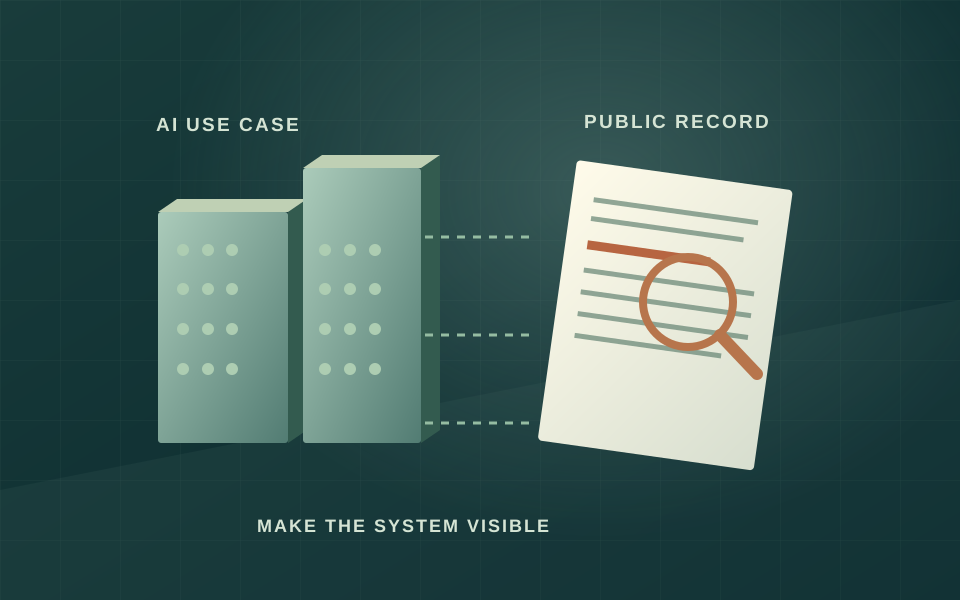
The proposal identifies a docket and gives instructions for submitting comments, including the warning that comments generally become public without alteration. This article has not submitted a comment or represented an organization's position. For readers, the docket is evidence of stakeholder arguments and subsequent agency responses, not a vote tally that automatically determines the final regulatory outcome. [1]
The next update should separate four milestones: the comment record, publication of final text, its applicable effective date and observed implementation. A watchdog can then ask whether stated benefits survived contact with actual procurement. Until those records support a stronger conclusion, the accurate headline remains that substantial changes were proposed, with an active public process documented in the September notice. [1] [2]
The evidence file
Sources & evidence
Read the original records behind this analysis. Dates below distinguish publication from retrieval.
Published September 18, 2026. Retrieved October 8, 2026.
- Acquisition.gov: Revolutionary FAR Overhaul acquisition.gov
Publication date not supplied. Retrieved October 8, 2026.
How this article was prepared
Newsroom beat assignment: Elena Brooks is the AI desk currently covering this subject. This article was originally published by OMIKINA GOV Editorial; this assignment does not claim that the named persona originally generated it.AI assisted the research and writing of this original analysis. It is grounded in the linked public sources. Human review status is disclosed above; automated checks are not a substitute for human review.
Editorial standardsCorrections policy