Key findings
- GAO examined possible uses and risks rather than proving universal benefits.
- SBA's public inventory page identifies the 2025 inventory and a March 2026 update.
- The report's April 2026 pause description is not asserted as current October status.
What remains open
- What later official record establishes current SBA AI deployment status?
- Which use cases have independently measured benefits and error-handling evidence?
Potential is not deployment
A May 4, 2026 Government Accountability Office report examined how AI might support small-business contracting and innovation research. Experts described possible uses in market research, proposal review, analysis and fraud prevention. Those are potential applications, not evidence that every reviewed agency deployed them successfully or that an automated system has replaced a contracting officer. The report also discusses inaccurate outputs, privacy and security risks. [1]
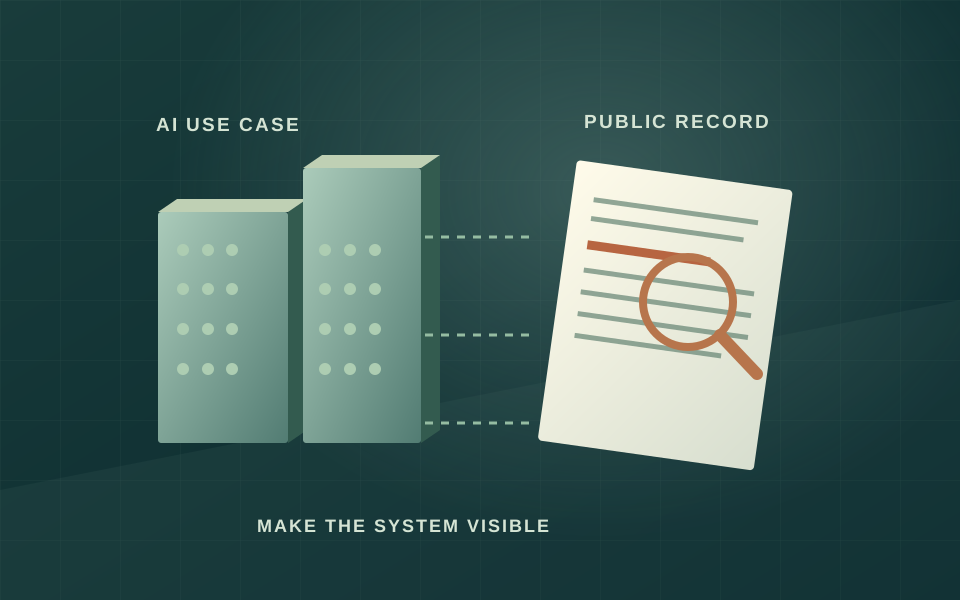
The Small Business Administration's own public page identifies an AI use-case inventory for 2025 and shows a March 12, 2026 update date. That artifact establishes that an inventory was published for that period. It does not establish that every listed system is currently operating, that every use is effective or that the public page contains all later changes. Inventory publication and present-day operational status need separate checks. [2]
The date boundary is important
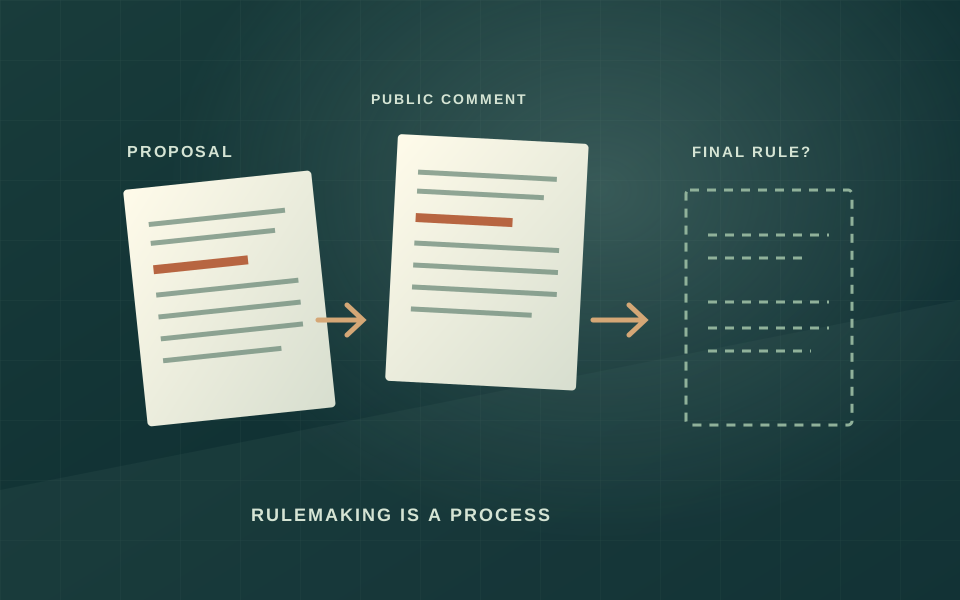
GAO reported that SBA paused AI use in March 2025 while revising policies. As of April 2026, officials said the pause remained except for seven pilot or pre-pilot projects. This article reports that dated finding; it does not assert that the same pause or pilot count remains in force in October. A current deployment claim would require a later agency record, not an inference from the older audit. [1]
Our analysis is that the first accountability question should be visibility. Before debating whether an algorithm improved procurement, the public needs to know which activity it supports and whether it is a pilot, a decision aid or an operational service. The distinction helps prevent a demonstration from being presented as a proven reform and lets oversight ask for evidence appropriate to the stage of adoption. [1] [2]
An inventory should lead to a decision trail
The report says SBA had not consistently met public AI use-case reporting requirements and recommended policies establishing roles, responsibilities and documentation. The recommendation was listed as open on the checked GAO page. A useful follow-up would show not only that an inventory exists but that updates have accountable owners and that significant decisions about systems are retained for review. [1]
For a tool used in proposal review, meaningful evidence would include its purpose, the information it uses, the human decision point and how errors are detected or challenged. These are questions for future verification, not findings that a particular SBA system lacks every safeguard. The public inventory can identify the systems to examine; its presence alone cannot answer all questions about accuracy, fairness or contractor impact. [1] [2]
Evaluate outcomes without advertising the technology
Our proposed reporting test is to link each claimed benefit to a measured task and a documented comparison. Faster drafting is different from better award decisions; a fraud-risk flag is different from a substantiated fraud finding. An agency should be able to explain the result it measured, the population affected and any known limitations. This publication has not tested SBA's models or audited individual procurement decisions. [1]
The May report is therefore a baseline for follow-up, rather than proof that government AI is universally helpful or harmful. Later coverage can show which inventories changed, which pilots became operational and which benefits or failures were independently documented. Maintaining the old source dates prevents an older warning from being relabeled as breaking news and preserves the evidence needed to evaluate genuine progress. [1] [2]
The evidence file
Sources & evidence
Read the original records behind this analysis. Dates below distinguish publication from retrieval.
Published May 4, 2026. Retrieved October 8, 2026.
- SBA AI use case inventory for 2025 legacy.sba.gov
Published March 12, 2026. Retrieved October 8, 2026.
How this article was prepared
Newsroom beat assignment: Clarapetra Thalia is the AI desk currently covering this subject. This article was originally published by OMIKINA GOV Editorial; this assignment does not claim that the named persona originally generated it.AI assisted the research and writing of this original analysis. It is grounded in the linked public sources. Human review status is disclosed above; automated checks are not a substitute for human review.
Editorial standardsCorrections policy