Key findings
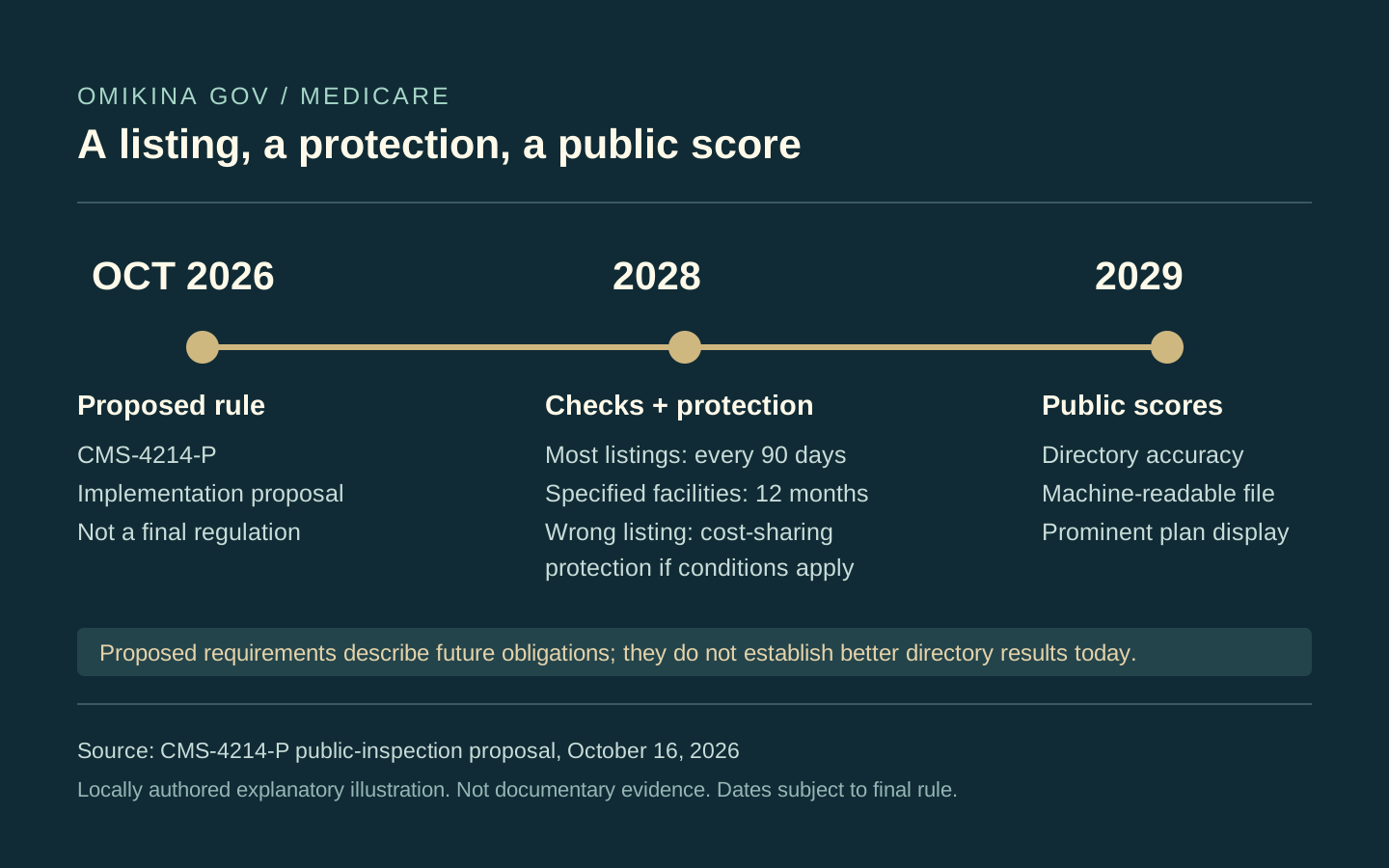
- Most covered provider listings would face verification at least every 90 days; specified hospitals and facilities have a proposed 12-month exception.
- Directory requirements and cost-sharing protections begin in 2028 under the proposal; public accuracy scores follow in 2029.
- The zero generic copayment is limited to the specified low-income full-benefit dual eligible population beginning in 2028.
What remains open
- Will the final rule preserve the proposed directory verification and enrollee cost-sharing protections?
- How will final public accuracy scores and PBM reporting support independent evaluation of results?
A proposal with more than one clock
The Centers for Medicare & Medicaid Services issued CMS-4214-P on October 16, proposing regulations to implement three sections of the Consolidated Appropriations Act, 2026. The package addresses Medicare Advantage provider directories, certain low-income Part D copayments and pharmacy benefit manager compensation and reporting. It is a proposed implementing rule, not a finalized regulation or evidence that any plan’s directory has already improved. [1] [3]
Timing is central to understanding the announcement. The rule’s executive summary places new directory accuracy and accountability requirements in contract year 2028, with public machine-readable scores and prominent directory displays following in contract year 2029. Readers evaluating coverage now should not treat those future provisions as protections newly delivered by this announcement. CMS is describing how it proposes to implement statutory changes, rather than announcing completed compliance. [3] [1]
Check the listing, then protect the patient
The proposed verification schedule is more specific than a blanket quarterly check. For covered Medicare Advantage plans, CMS proposes verifying most listed providers’ directory information at least every 90 days. Acute inpatient hospitals, intensive care services and outpatient or ambulatory surgical services would instead be subject to verification at least every 12 months. That exception matters when comparing a plan’s obligations with the simplified description in the agency’s announcement. [3] [2]
The companion cost-sharing protection addresses reliance on a wrong listing. Under the proposed text, an enrollee receiving an otherwise covered service from an out-of-network provider listed in the online directory when the appointment was made would owe the lesser of the in-network amount or the cost sharing otherwise applicable. Plans would apply the protection without a request when they know or reasonably should know it applies; an enrollee or representative could also request it verbally or in writing. [3]
The accountability chain therefore runs from verifying information to preserving the circumstances of an appointment and correcting the patient’s financial exposure. CMS also proposes provider-contract terms requiring documentation of the earliest appointment date, even after rescheduling. As an analytical matter, an accuracy grade alone would not establish that an individual billing problem was resolved: the listing, appointment record and cost-sharing decision answer different questions. [3]
Two Part D changes, with different evidence limits
The generic-drug provision is targeted. CMS proposes a zero copayment beginning January 1, 2028 for full-benefit dual eligible individuals whose incomes do not exceed 100% of the federal poverty level. The proposed rule says it would not change the eligibility criteria, subsidy structure or other cost-sharing parameters for that population. This is not a proposal for free prescriptions for every Medicare enrollee. [3] [1]
Even the shorthand dollar comparison needs care. The fact sheet describes a reduction from $1 to $0, but the proposed rule explains that the existing $1 statutory amount is adjusted annually for inflation and is $1.60 for generic drugs in plan year 2026 for the specified population. Those are different reference points. A reader should not interpret the agency’s statutory-baseline comparison as the exact current copayment for every affected prescription. [3] [1]
For pharmacy benefit managers, the proposal would add compensation restrictions, data reporting and disclosures to Part D plan sponsors and CMS, along with compliance and enforcement mechanisms. The proposed rule’s financial-impact summary says it cannot estimate the PBM provision’s financial impact because it lacks data on contract structures and the difference between current fees and proposed fair market value. Transparency requirements are a policy mechanism; this record does not establish a measured reduction in drug prices. [3] [1]
What this record establishes—and leaves open
This analysis uses the October 16 CMS fact sheet and announcement alongside the original public-inspection rule text. The rule is a prepublication proposal; subsequent publication or revision could change details. CMS’s newsroom says comments will be open for 60 days after Federal Register publication, while the retrieved prepublication text specifies December 15, 2026 at 5 p.m. Eastern Standard Time. Readers considering comments should check the published notice and docket for the controlling deadline. [3] [1] [2]
The immediate verified change is the proposed regulatory framework, not improved directory performance, a completed enforcement action or demonstrated patient savings. Follow-up scrutiny should ask whether final requirements preserve the verification and billing protections, how public accuracy scores are calculated and whether PBM reporting enables costs to be evaluated. These records supply the proposed mechanisms; they do not supply future implementation results. [3] [1]
The evidence file
Sources & evidence
Read the original records behind this analysis. Dates below distinguish publication from retrieval.
Published October 16, 2026. Retrieved October 16, 2026.
- CMS Proposes Reforms to Strengthen Transparency and Affordability in Medicare Advantage and Part D cms.gov
Published October 16, 2026. Retrieved October 16, 2026.
- CMS-4214-P — original public-inspection proposed rule, document 2026-21420 federalregister.gov
Filed October 16, 2026. Retrieved October 16, 2026.
How this article was prepared
AI assisted the research and writing of this original analysis. It is grounded in the linked public sources. Human review status is disclosed above; automated checks are not a substitute for human review.
Editorial standardsCorrections policy