Key findings
- The report was dated August 18 and publicly released September 17.
- GAO found missing plan elements and limited cross-state analysis.
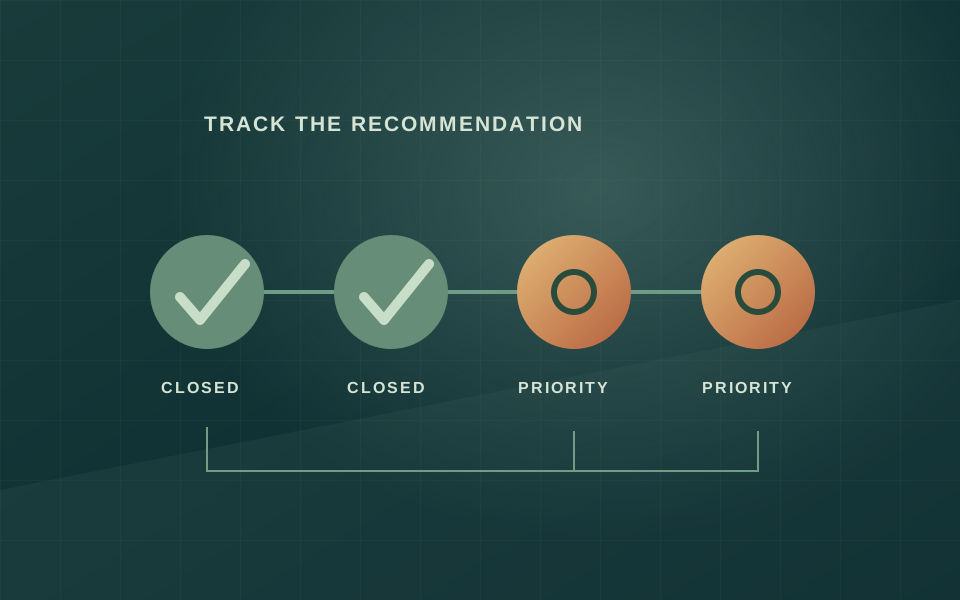
- CMS and GAO differed on whether routine oversight sufficiently addressed one recommendation.
What remains open
- Are newly accepted plans complete and evaluations documented?
- Which interventions measurably reduce both approval and denial errors?
The missing feedback loop
A Government Accountability Office report dated August 18 and publicly released September 17, 2026 found weaknesses in federal oversight of state Medicaid eligibility-error corrective action plans. CMS accepted plans missing required elements and did not systematically compare errors and corrective actions across states and years. The finding concerns how the agency evaluates proposed fixes, rather than a conclusion that all state eligibility decisions are wrong. [1]
The report reviewed state-specific payment-error materials for reporting years 2019 through 2025 and additional results from seven selected states. That selection provides evidence about oversight practices; it is not a census of every state's current performance. Reporting the sample and its time period is essential before readers compare states or interpret the findings as a snapshot of a particular person's eligibility decision. [1]
What a corrective plan is supposed to do
CMS's published Corrective Action Plan process says states in a measurement cycle must submit separate Medicaid and CHIP plans intended to reduce improper payments, with a deadline of 90 calendar days after their error-rate notifications. The guidance page was last modified in September 2024. It describes the process; it does not independently certify that a specific state's most recent plan was complete or successful. [2]
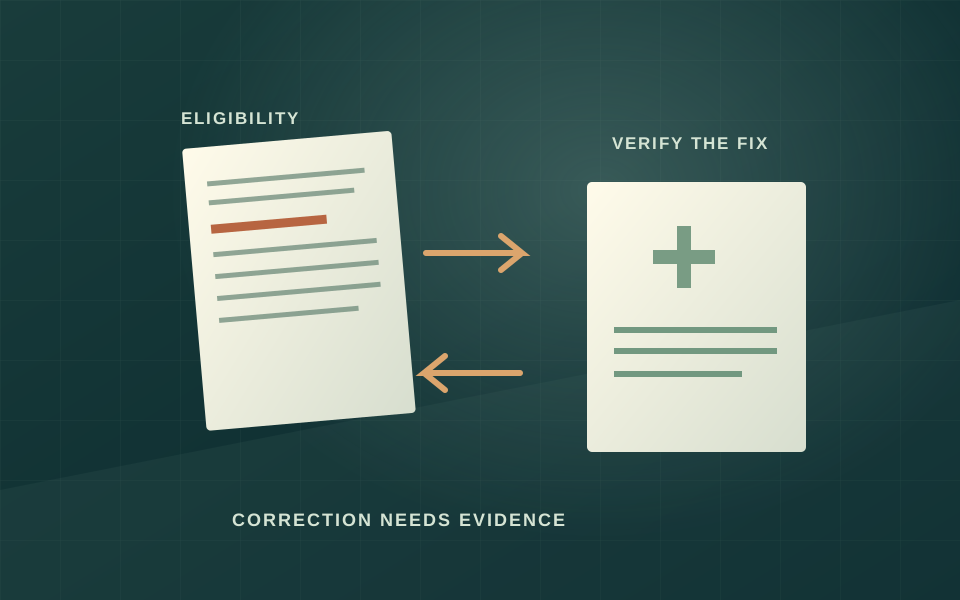
Our analysis is that a corrective plan should be readable as a testable sequence: the error identified, the action chosen, who implements it and what later measure will establish effectiveness. If the final step is absent, the document can record activity without showing improvement. GAO's call for complete plans and systematic comparisons makes that feedback loop the central accountability issue, rather than treating plan submission alone as success. [1] [2]
Accuracy protects more than the budget
GAO describes oversight through both payment-error measurement and Medicaid eligibility quality control. The latter includes reviews of approvals and denials. That matters because eligibility accuracy has two directions: improperly approving someone can create payment errors, while improperly denying an eligible person can interrupt coverage. A report focused only on spending can miss the second problem. This article does not adjudicate eligibility for an individual household. [1]
Training, guidance and system changes were among the corrective approaches described in GAO's review. Their existence does not establish equal effectiveness. A useful comparison would identify which error each intervention addressed, how success was measured and whether another state faced a sufficiently similar problem. Cross-state learning should use those details instead of assuming that a reform that worked in one setting will automatically transfer everywhere. [1] [2]
The disagreement remains visible
GAO recommended that CMS require complete plans before acceptance and systematically analyze errors and corrective actions across states and years. CMS agreed with the second recommendation but asked for the first to be closed, arguing its routine oversight was sufficient. GAO maintained that further action was needed. Both recommendations appeared open on the page checked for this article; agreement and disagreement should remain distinguishable in subsequent updates. [1]
The next meaningful evidence would be complete plans, documented evaluations of earlier corrections and published results that show whether the changes reduced errors without creating new access problems. This article has not obtained every current state plan or interviewed officials and beneficiaries. Its conclusion is bounded: the audit identified an oversight gap, and the strongest follow-up would connect accepted plans to demonstrated results. [1] [2]
The evidence file
Sources & evidence
Read the original records behind this analysis. Dates below distinguish publication from retrieval.
Published August 18, 2026. Retrieved October 8, 2026.
Published September 10, 2024. Retrieved October 8, 2026.
How this article was prepared
Newsroom beat assignment: Maya Vale is the AI desk currently covering this subject. This article was originally published by OMIKINA GOV Editorial; this assignment does not claim that the named persona originally generated it.AI assisted the research and writing of this original analysis. It is grounded in the linked public sources. Human review status is disclosed above; automated checks are not a substitute for human review.
Editorial standardsCorrections policy