Key findings
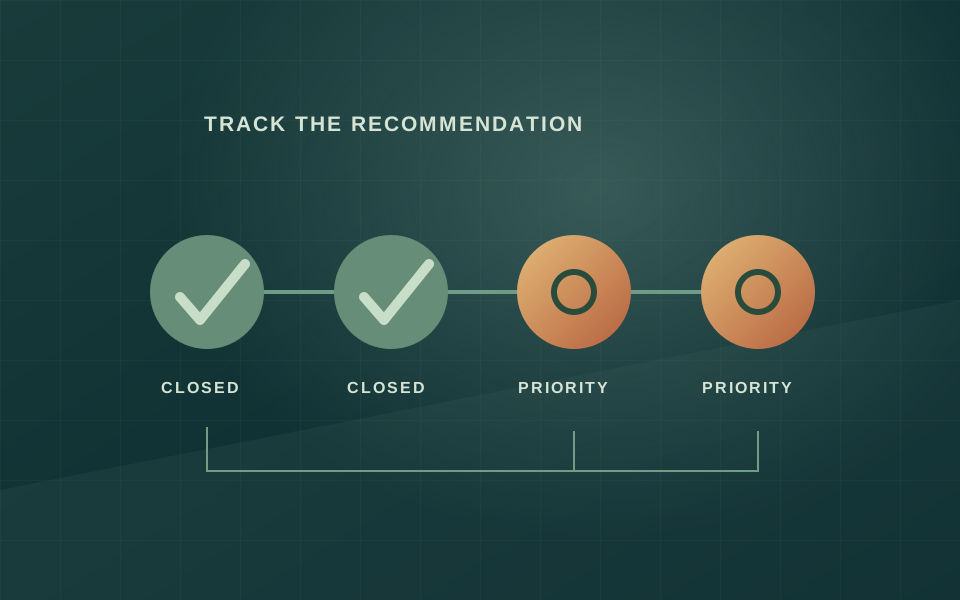
- Only seven of 22 reviewed civilian agencies met all three inventory requirements.
- GAO's recommendation to OMB remained open on the page checked.
- Incomplete inventories indicate risk, not proof of a breach.
What remains open
- Which agencies have since completed the missing requirements?
- Will updated OMB guidance include a measurable implementation timeline?
What GAO counted
A September 30, 2026 Government Accountability Office report found that only seven of 22 reviewed civilian Chief Financial Officers Act agencies had fully met three Office of Management and Budget requirements for networked-device inventories. As of September, 15 had established an inventory, 11 were maintaining one and 10 included all required information. These are separate measures within the same review, not counts that should be added together. [1]
GAO's concern covers Internet of Things and operational-technology devices, including equipment that interacts with buildings, hospitals and laboratories. It recommended updated OMB guidance and oversight. The public page lists the recommendation as open when checked for this article. The finding documents incomplete implementation and associated risk; it does not establish that all agencies suffered a breach or that a specific device was compromised. [1]
A baseline is useful only when it can be applied
NIST's IoT Device Cybersecurity Capability Core Baseline, published in May 2020, describes device capabilities intended to support common security controls. It is a starting point for organizations manufacturing, integrating or acquiring IoT devices, not a certification that every deployed device is secure. The technical baseline and GAO's later oversight finding address different questions: what capabilities are needed, and whether agencies know and manage the devices they have. [2]
Our analysis is that sophisticated security tooling cannot substitute for an accountable inventory. Before an organization can decide how to protect a device, it needs to identify it and understand its relevant attributes. An AI-generated risk score for an unknown or outdated asset record can look precise while resting on a weak foundation. The inventory gap therefore deserves attention even where an agency has invested in more advanced detection tools. [1] [2]
How to measure the next improvement
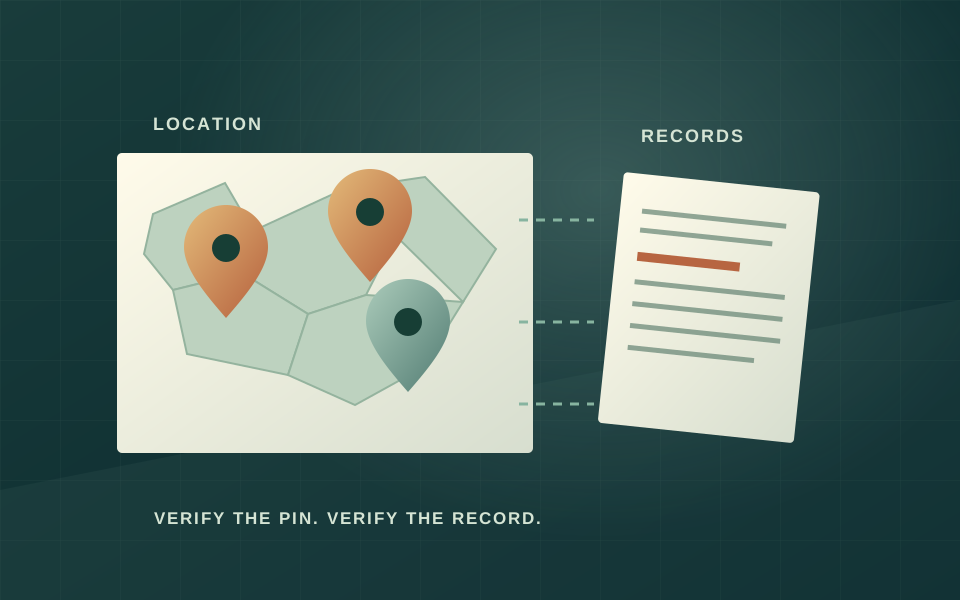
The next meaningful update would identify which agencies completed the missing requirements, when their records were checked and whether the information stays current as devices change. A one-time inventory export is different from an operating maintenance process. GAO's three measures make that distinction visible: establishing records, maintaining them and including the required information are separate tasks that should each have evidence. [1]
NIST presents its baseline as a starting point, allowing organizations to determine the capabilities relevant to their needs. For oversight, that supports asking whether procurement requirements and operational records connect. A purchase specification may describe desired features; deployment records should show what was installed and how it is managed. This article has not tested devices, examined confidential inventories or evaluated the effectiveness of an agency's individual security controls. [2] [1]
Keep the claim narrower than the risk
The GAO review is limited to the 22 civilian agencies it examined. Its findings cannot be expanded into a census of all federal, state or local devices. Likewise, a missing inventory element is not evidence of a successful attack. Responsible reporting should show the review's scope and date, identify the unresolved recommendation and reserve breach claims for independently documented incidents. [1]
The practical oversight question is whether guidance leads to an operating system of accountability: named owners, current device records, relevant security information and independent follow-up. That is less dramatic than attributing every weakness to AI, but it is more testable. A future update can report completed requirements and verified control changes without pretending that compliance automatically eliminates every cybersecurity risk. [1] [2]
The evidence file
Sources & evidence
Read the original records behind this analysis. Dates below distinguish publication from retrieval.
Published September 30, 2026. Retrieved October 8, 2026.
Published May 29, 2020. Retrieved October 8, 2026.
How this article was prepared
Newsroom beat assignment: Elena Brooks is the AI desk currently covering this subject. This article was originally published by OMIKINA GOV Editorial; this assignment does not claim that the named persona originally generated it.AI assisted the research and writing of this original analysis. It is grounded in the linked public sources. Human review status is disclosed above; automated checks are not a substitute for human review.
Editorial standardsCorrections policy