Key findings
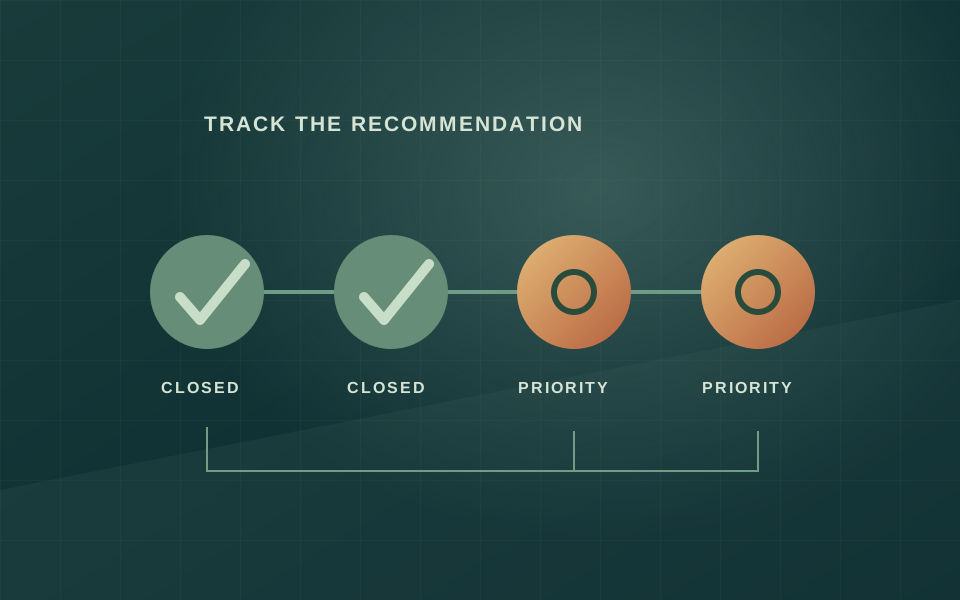
- Two specified priority recommendations were closed on September 30.
- Two recommendations dating to 2018 and 2019 were newly designated priorities.
- The OIG distinguishes resolved plans from closed recommendations.
What remains open
- What documented actions supported the two closures?
- What implementation milestones apply to the newly prioritized recommendations?
What changed on September 30
The Justice Department inspector general announced on September 30, 2026 that it had closed two priority recommendations: one concerning FBI coordination with state and local law enforcement after allegations of crimes against children, and another concerning a reliable method for determining Bureau of Prisons staffing levels. The announcement records a specific oversight milestone. It does not say that every related program weakness or every recommendation to either component has been eliminated. [1]
The office simultaneously designated two new priorities drawn from older work. One 2018 recommendation concerns guidance on investigative actions that could affect an election. A 2019 recommendation concerns which Sensitive Investigative Matters require advance notification to a senior Justice Department official. Their designation is a change in oversight priority, not evidence that a new incident or criminal case occurred on the announcement date. [1]
Resolved is not the same as closed
The inspector general's public definitions provide an important guardrail. A resolved recommendation means DOJ has agreed to act or proposed an action that would address it. An open recommendation has not been fully implemented to the OIG's satisfaction. Closure generally follows an OIG determination that sufficient action has been taken, though the glossary notes rare cases where full implementation is no longer practicable. [2]
That distinction changes how progress should be described. An agency can accept a recommendation while the underlying corrective work remains unfinished. It can also complete a documented procedure without proving every desired real-world outcome. Our analysis is that a useful watchdog page should preserve both the OIG's formal status and the narrower evidence supporting it, rather than translating any positive status change into a universal claim that a problem is fixed. [2] [1]
The unit of accountability matters
The OIG explains that some recommendations contain multiple subparts and that those subparts can appear as separate items in its public records. Consequently, a simple count of open items is not automatically a count of distinct failures, investigations or affected people. A meaningful comparison needs stable recommendation identifiers and the original report context, especially when a recommendation is split, modified or reassigned over time. [2]
Priority status is also a judgment about potential benefit or impact, not a legal conclusion. The office considers factors such as monetary effect, safety, efficiency, mission importance and value to policymakers. Readers should therefore see why an item became a priority and how long it has been open. A newly elevated older recommendation is a follow-up opportunity; its age alone does not establish intentional obstruction. [2]
What a follow-up should ask
The strongest next questions concern evidence: which policies or staffing methods supported the two closures, when they became operational and whether subsequent reviews show they remain effective. For the newly designated priorities, useful updates would identify the accountable office, the proposed response and any verified implementation milestone. This article has not obtained additional internal records or sought an agency response beyond the published announcement. [1] [2]
A transparent reporting timeline can recognize progress without losing unfinished work. It would retain the original recommendation, accepted response, status changes and supporting follow-up. That approach lets readers distinguish an actual closure from an announcement of intent and prevents the publication date of a status update from replacing the date when the original problem was documented. [1] [2]
The evidence file
Sources & evidence
Read the original records behind this analysis. Dates below distinguish publication from retrieval.
Published September 30, 2026. Retrieved October 8, 2026.
- DOJ OIG recommendation status definitions oig.justice.gov
Publication date not supplied. Retrieved October 8, 2026.
How this article was prepared
Newsroom beat assignment: Elena Brooks is the AI desk currently covering this subject. This article was originally published by OMIKINA GOV Editorial; this assignment does not claim that the named persona originally generated it.AI assisted the research and writing of this original analysis. It is grounded in the linked public sources. Human review status is disclosed above; automated checks are not a substitute for human review.
Editorial standardsCorrections policy