Key findings
- Agencies estimated $186 billion in improper payments for FY 2025.
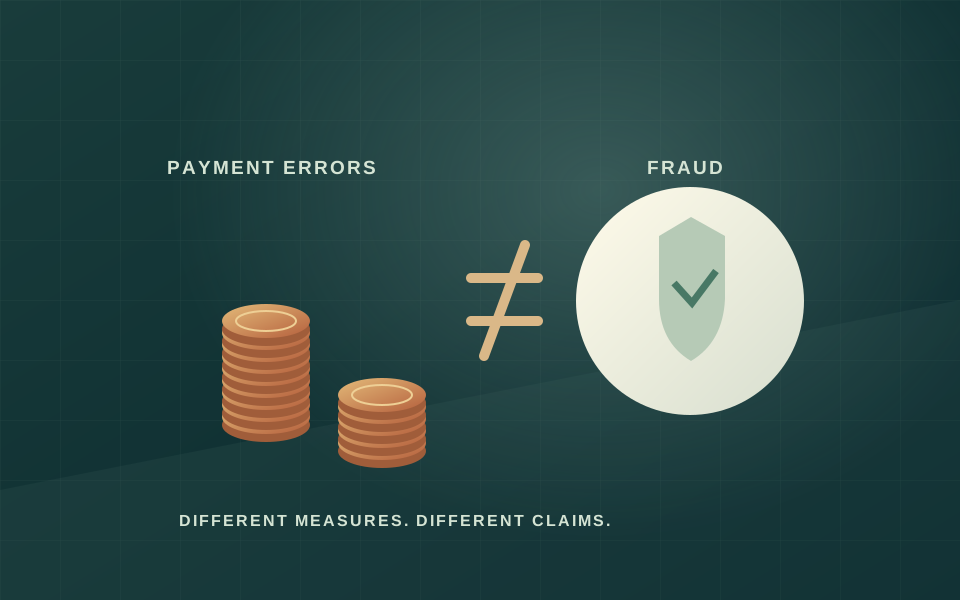
- The estimate is not a measured total of proven fraud.
- GAO separately identified reporting-control weaknesses and six recommendations.
What remains open
- Which program corrections have been independently verified?
- What amounts identified for recovery have actually been collected?
Read the number with its definition
Federal agencies estimated about $186 billion in improper payments across 64 programs for fiscal year 2025, according to an April 27, 2026 Government Accountability Office report. Fifteen agencies reported the estimates, and roughly $153 billion consisted of overpayments. The figure measures payments that should not have been made or were made in an incorrect amount. It is not a judicially established fraud total or a count of criminal convictions. [1]
GAO also cautioned that the estimate does not capture the full extent of government-wide improper payments. Some susceptible programs were not included. A watchdog therefore should avoid both exaggerations: treating the figure as a proven theft amount and treating it as a complete inventory of all payment errors. The report describes an estimated measurement problem with limits, not a final ledger of every loss. [1]
The second problem is visibility
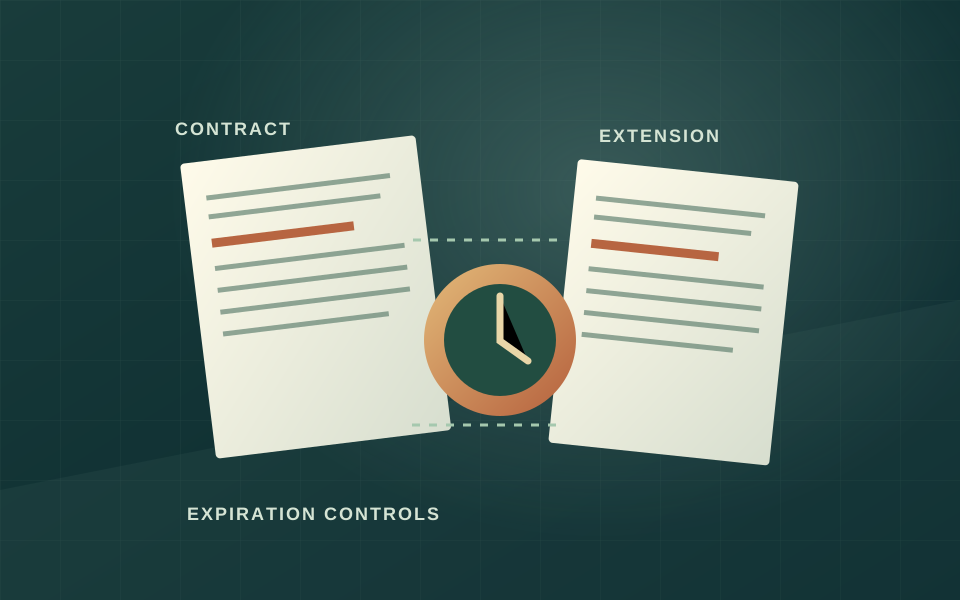
In a June 4 follow-up, GAO examined reporting for programs with repeated noncompliance under payment-integrity requirements. It found that five of seven reviewed agencies lacked sufficient documented procedures for consistent, timely reporting. GAO made six recommendations addressing agency processes and OMB guidance. This is distinct from the payment estimate: it concerns whether Congress and oversight bodies receive the information needed to evaluate corrective action. [2]
Our analysis is that these two records belong on the same timeline but not in the same numerical total. One describes estimated payment errors in a fiscal year; the other examines compliance and reporting practices across earlier years. Combining them can show why follow-up is difficult. Adding their findings as if they were independent dollar losses would instead double-count concepts and obscure what the audits actually measured. [1] [2]
A recovery announcement needs a separate ledger
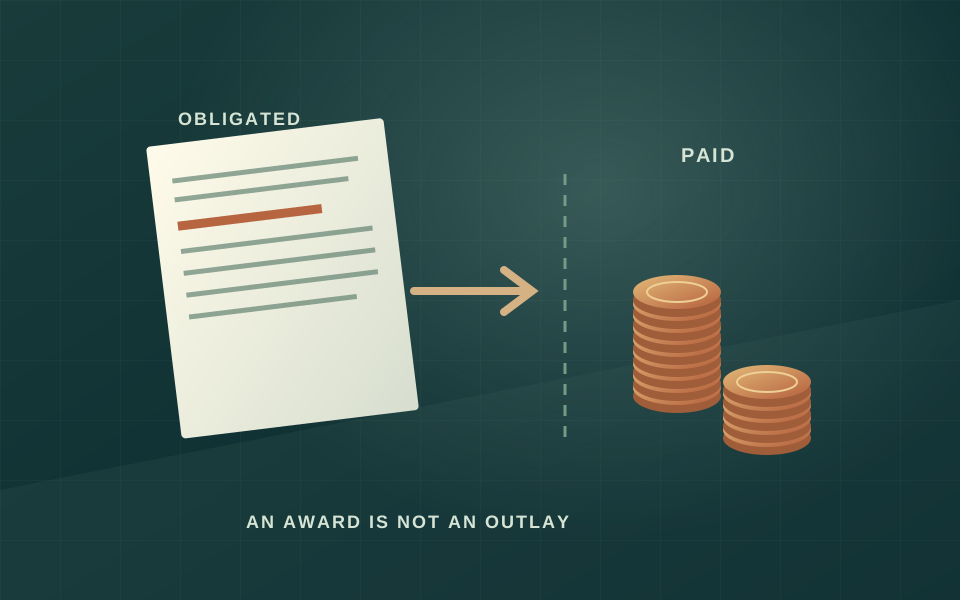
The meaningful follow-up is program-specific. An agency should identify the error type, affected period, estimation method, proposed correction and subsequent evidence that the correction worked. Where money is recovered, reporting should distinguish an amount identified for recovery from an amount actually collected. Neither a corrective plan nor a headline estimate demonstrates collection. This article has not audited recovery accounts or calculated a new government-wide amount. [1] [2]
The June report provides a concrete accountability test: can agencies show the required information was tracked and submitted on time? A new reporting procedure is a process change; its operation should be supported by actual submissions and dates. GAO's public recommendation entries were still listed as open when checked. Agency agreement with a recommendation should not be translated into independent confirmation that it was implemented. [2]
Measure improvement without changing the yardstick
A lower future estimate can be meaningful, but a comparison needs the same program coverage and an explanation of methodological changes. An omitted program or a revised sampling approach can change a total without demonstrating an equivalent improvement in payment accuracy. That is an analytical caution grounded in GAO's stated limits, not a claim that the fiscal-year 2025 increase was entirely caused by a change in methodology. [1]
For public reporting, the useful question is narrower and more actionable than whether a single giant number proves waste: which programs have recurring errors, which corrective actions were verified and which reporting obligations remain unmet? Preserving the fiscal year, source publication date and recommendation status makes future updates comparable. It also allows real progress to be recognized without presenting estimated errors, alleged fraud and recovered cash as interchangeable. [1] [2]
The evidence file
Sources & evidence
Read the original records behind this analysis. Dates below distinguish publication from retrieval.
Published April 27, 2026. Retrieved October 8, 2026.
Published June 4, 2026. Retrieved October 8, 2026.
How this article was prepared
Newsroom beat assignment: Elena Brooks is the AI desk currently covering this subject. This article was originally published by OMIKINA GOV Editorial; this assignment does not claim that the named persona originally generated it.AI assisted the research and writing of this original analysis. It is grounded in the linked public sources. Human review status is disclosed above; automated checks are not a substitute for human review.
Editorial standardsCorrections policy