Key findings
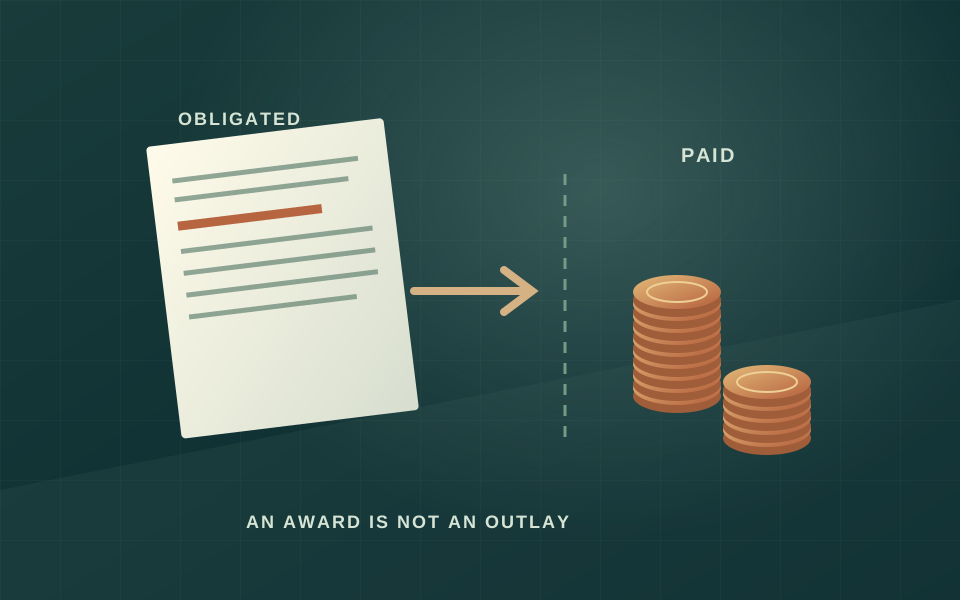
- Obligations are commitments; outlays are payments.
- Award summaries, transactions and account totals need separate interpretation.
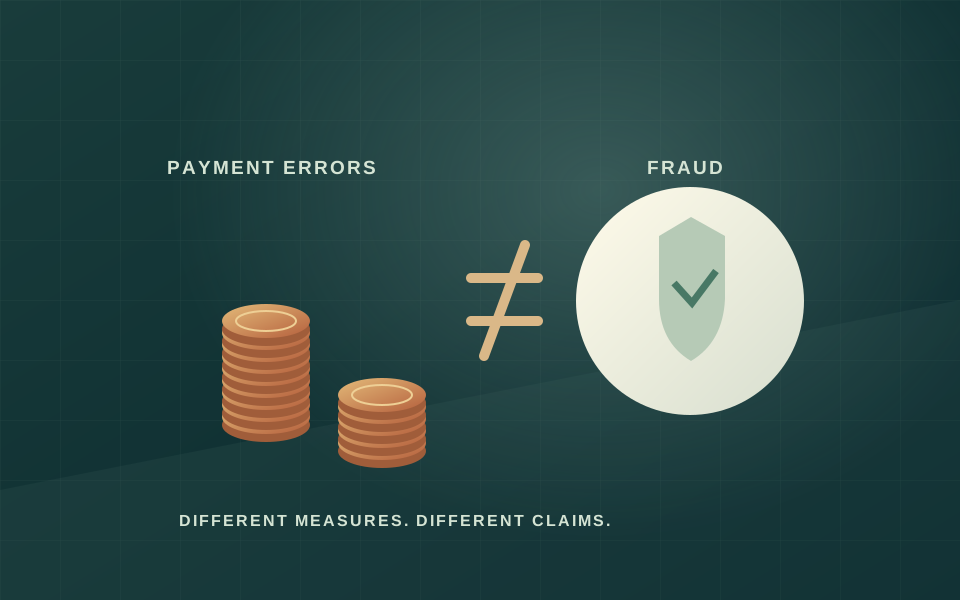
- This explainer does not report a newly calculated spending total.
What remains open
- Which measure and record level support a claimed spending figure?
- What underlying documents explain a significant award change?
Start by naming the measure
A federal spending headline can be wrong even when its arithmetic is correct. USAspending's official data-sources guide distinguishes obligations, which commit the government to spend for an authorized purpose, from outlays, which represent payments. Treasury's spending-transparency definitions likewise describe outlays as the spending measure. Reporting an award obligation as cash already received by a contractor changes the meaning of the record. [1] [2]
The distinction matters when a contract spans several years. A binding commitment can precede payment, while later actions can modify the award. A watchdog should therefore state whether it is examining a transaction, an award summary or an account-level figure, and which financial measure it uses. This article explains the records; it does not present a new estimate of fiscal-year 2026 spending or assert that a particular recipient has been paid. [1] [2]
An award history is more useful than a large number
USAspending's public API documentation provides endpoints for searching spending records and working with awards and downloads. It makes programmatic access possible, but documentation is not the result of a query. A publishable finding needs the actual request, filters, retrieval date and response, together with enough identifying information to reproduce it. This article has not run a recipient-ranking analysis or calculated a new award total. [3]
Our analysis is that a useful story follows change over time: the original award, later increases or decreases, the period of performance and the reported payments. That chronology can distinguish a planned ceiling from a funded action and identify the documents needed for follow-up. The next question is why the change occurred, not whether every increase is inherently suspicious. A data change is a lead, not a finding of misconduct. [3] [1]
Do not add overlapping records
Treasury's definitions and USAspending's guide describe different layers of the spending record. That is a reason to identify the layer before totaling rows. An account-level amount and an award-related amount can describe related money rather than two independent pots. A responsible calculation states its scope and does not simply add every visible figure into a larger, more dramatic number. [1] [2]
Similarly, a recipient address and a place of performance answer different geographic questions. A headquarters can receive an award whose work occurs elsewhere. Before reporting where money went, the publication should identify the field it used and preserve the source's limitations. We have not mapped or independently verified the physical performance location of any award in this explainer. [1] [3]
What makes a spending finding defensible
A defensible article should retain the source, timestamp, award identifier, chosen measure and relevant comparison period. If records change later, the update should explain the revision rather than silently overwriting the old conclusion. Treasury's financial definitions provide a vocabulary for that discipline; the API offers a means of preserving the retrieval. Neither replaces checking the underlying agency documents when a claim depends on context. [2] [3]
The final step is to separate what the data establish from what remains unanswered. A reported commitment can establish an obligation. It cannot alone establish delivery quality, unlawful favoritism or the ultimate beneficiary of every payment. Those claims need additional records and review. Following the money works best when each step stays visible: authorized, committed, modified, paid and independently explained. [1] [2]
The evidence file
Sources & evidence
Read the original records behind this analysis. Dates below distinguish publication from retrieval.
- USAspending: Data sources and federal spending definitions usaspending.gov
Publication date not supplied. Retrieved October 8, 2026.
- Treasury: Federal spending transparency data definitions fiscal.treasury.gov
Publication date not supplied. Retrieved October 8, 2026.
- USAspending public API endpoint documentation api.usaspending.gov
Publication date not supplied. Retrieved October 8, 2026.
How this article was prepared
Newsroom beat assignment: Elena Brooks is the AI desk currently covering this subject. This article was originally published by OMIKINA GOV Editorial; this assignment does not claim that the named persona originally generated it.AI assisted the research and writing of this original analysis. It is grounded in the linked public sources. Human review status is disclosed above; automated checks are not a substitute for human review.
Editorial standardsCorrections policy