Key findings
- 79 of 196 sampled building surveys understated costs by $73 million.
- The audit found weaknesses in source-data use and independent review.
- Agency agreement is not proof that corrections are complete.
What remains open
- Have the sampled assessments been corrected?
- How will significant deterioration be captured between five-year surveys?
The finding and its boundary
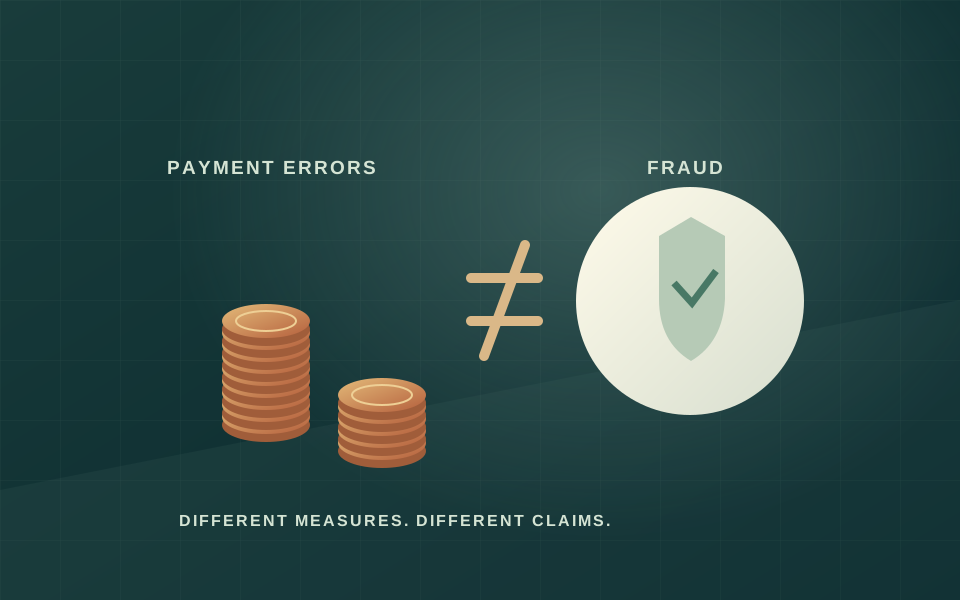
The General Services Administration's inspector general found that 79 building-assessment surveys in a sample of 196 buildings understated repair and alteration costs by a combined $73 million. The September 9, 2026 audit concerns the data used to estimate maintenance needs. The amount is not a finding that $73 million was stolen, spent improperly or missing from a bank account, and it should not be projected across the entire federal portfolio. [1]
The Public Buildings Service uses its Building Assessment Tool to estimate the work needed to correct major building deficiencies. Auditors found inconsistent use of existing repair-cost information and inconsistent independent checks. PBS agreed with the recommendations. The report therefore identifies a measurable weakness and an accepted corrective direction, but the public summary does not demonstrate that all affected assessments have already been repaired. [1]
Why an understated estimate matters
GSA's annual financial report is a separate accountability record: GovInfo identifies it as an audited statement covering the agency's accounts and activities for the preceding fiscal year. Operational estimates and financial statements serve related but different purposes. A maintenance estimate describes work that may need funding; an audited financial report is not a receipt proving that every building's physical condition has been correctly measured. [2] [1]
Our analysis is that poor input data can distort choices before a repair contract is ever awarded. If one building's deficiencies are understated, it can look less urgent than another building whose survey is more complete. That is a prioritization risk, not evidence that any specific project was wrongly selected. Testing that consequence would require the actual assessment versions, ranking rules and funding decisions. [1]
The review cycle makes quality more important
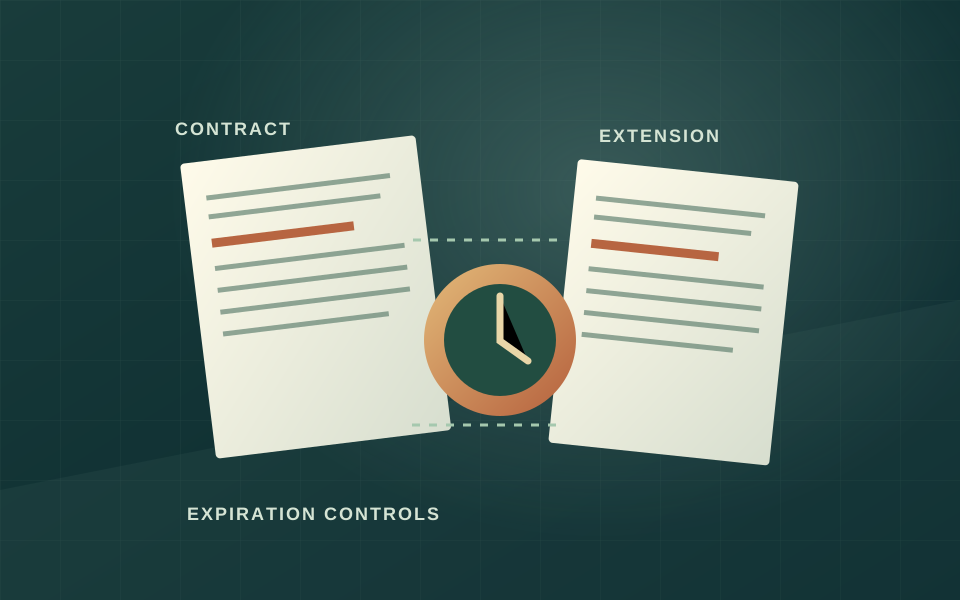
The audit says PBS moved its assessment cycle from two years to five following staffing reductions and reorganization in 2025. Longer intervals increase the importance of checking the information already available when a survey is completed. They also create a useful oversight question: what process captures significant changes between surveys, and how are those changes reflected when the agency decides which repairs to fund? [1]
One proposed control is basic separation of duties: a survey should have a different preparer and approver, with both roles documented. Another is to compare assessments against existing repair-information systems, especially when a survey reports no liability. In our view, a reported zero deserves scrutiny because it can reflect either an adequately maintained building or an incomplete assessment; the value alone cannot establish which explanation applies. [1]
Follow the correction, not only the headline
The next meaningful evidence would be corrected values for the sampled surveys, the revised approval procedure and a follow-up test showing that the procedure operates in practice. Those records would connect an audit finding to an actual improvement. This article has not independently inspected the buildings or checked the full underlying assessment database, and it cannot assign a portfolio-wide maintenance total from the sample. [1]
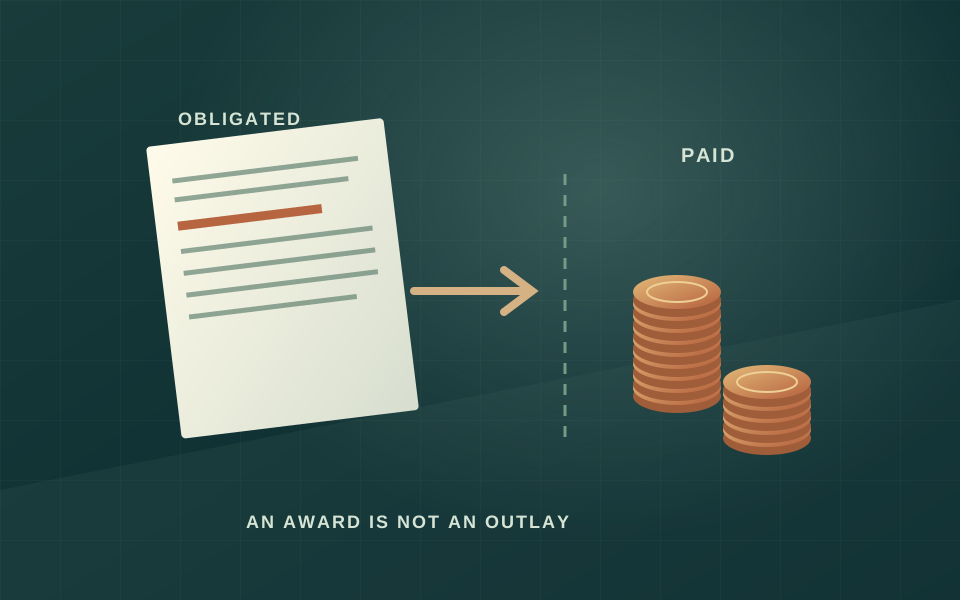
For readers tracking public spending, the distinction is essential: a repair estimate, an approved budget, a contract obligation and a payment are different events. The useful story is whether reliable assessments guide those later decisions. Keeping the September audit separate from the earlier fiscal-year financial report avoids implying that a newly published finding was already reflected in every historical disclosure. [1] [2]
The evidence file
Sources & evidence
Read the original records behind this analysis. Dates below distinguish publication from retrieval.
- PBS Building Assessment Tool audit gsaig.gov
Published September 9, 2026. Retrieved October 8, 2026.
Published December 18, 2025. Retrieved October 8, 2026.
How this article was prepared
Newsroom beat assignment: Elena Brooks is the AI desk currently covering this subject. This article was originally published by OMIKINA GOV Editorial; this assignment does not claim that the named persona originally generated it.AI assisted the research and writing of this original analysis. It is grounded in the linked public sources. Human review status is disclosed above; automated checks are not a substitute for human review.
Editorial standardsCorrections policy