Key findings
- GAO publicly released the audit October 8; the report itself is dated September 8.
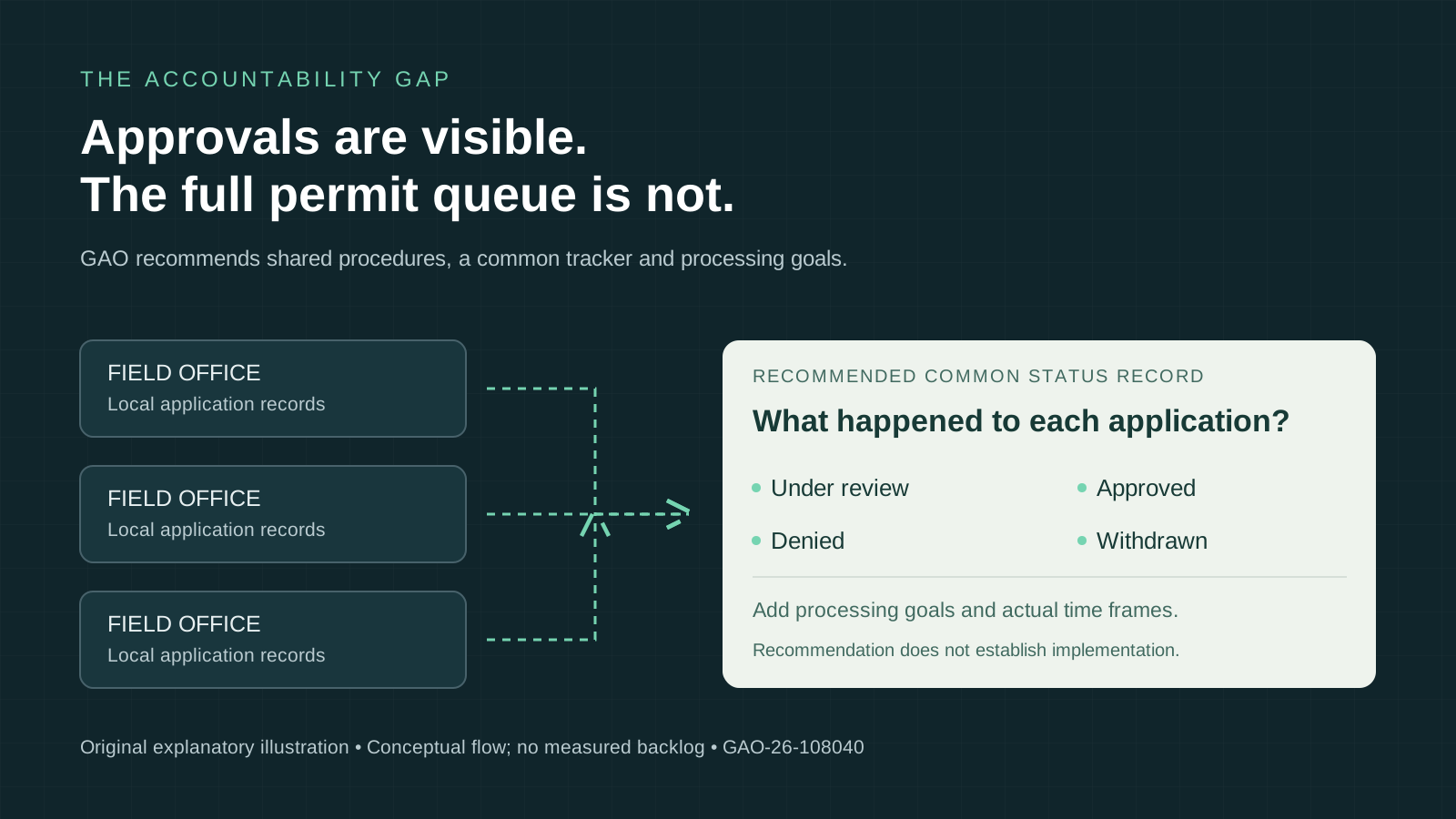
- BLM has annual approval counts, but lacks readily assembled comprehensive permit-status information across offices.
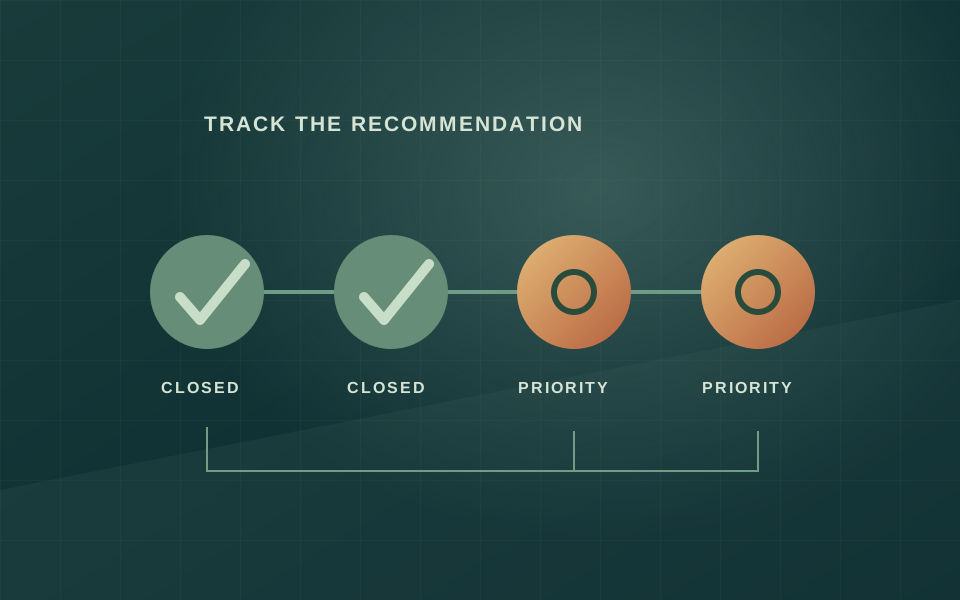
- Three recommendations remained open on the retrieved GAO page; implementation is not established.
What remains open
- When will BLM publish its finalized geothermal resources handbooks?
- What evidence will show a unified permit tracker is operating across field offices?
- How will processing goals be defined and evaluated against actual applications?
- How should the conflicting GAO summaries of Interior’s comments be reconciled?
More activity, incomplete visibility
The Bureau of Land Management is handling growing interest in geothermal development on federal land, but the government cannot readily see the status of its permit applications across field offices. A Government Accountability Office audit dated September 8 and publicly released October 8 identifies missing management tools: finalized public handbooks, unified permit tracking and defined processing-time goals. GAO’s public recommendation table lists all three recommendations as open. [1] [2]
The activity measures are substantial. GAO reports nominated acreage increased from about 25,800 acres in 2020 to more than one million in 2025. Separately, approved geothermal drilling permits rose from seven in fiscal 2019 to 68 in fiscal 2024. These are different stages of development and different reporting periods. Nominated land is not completed generation, and an approved permit is not a power plant delivering electricity. [2]
Approval totals do not reveal the queue
BLM does collect annual figures for approved drilling permits and wells started and completed. The audit’s concern is more specific: headquarters cannot quickly assemble comprehensive application-status information. GAO describes field offices maintaining their own records, including spreadsheets and some use of a lease-record system. A headquarters tracker template existed, but none of the state or field officials interviewed reported using it to manage permitting information. [2]
That distinction changes how the problem should be reported. Rising approvals can demonstrate more administrative activity while leaving unresolved how many applications await review, how long each has waited, or whether pending work is accumulating. GAO says establishing whether a backlog is growing is difficult. The report does not establish a current national backlog total or a measured amount of electricity lost because applications remain pending. [2]
Our analysis is that a useful status record should distinguish an application under review from one approved, denied or withdrawn, and connect it to its processing timeline. Those are the categories GAO says are difficult to assemble across offices. A dashboard displaying only approvals could look more transparent while leaving the central management question unanswered: what work remains, and how is it progressing? [2]
Procedures and time goals need different evidence
The audit also identifies geothermal resources handbooks that have remained in draft since at least 2022 and are not publicly available. Some developers described permitting determinations they believed were inconsistent; GAO notes that differing terminology can contribute to misunderstandings. Those developer accounts are evidence of reported experience, not a finding that every office applies the rules inconsistently. Publishing procedures would give both applicants and agency staff a shared reference. [2]
GAO’s third recommendation asks BLM to define goals for processing geothermal permits. A goal is not a guaranteed approval date or a direction to waive a required review. Our analysis is that progress should be assessed against both the declared time frame and the actual application status. Finalizing a handbook, creating a tracker and defining goals are distinct actions; completing one would not establish that the other two are complete. [2]
What the record leaves unresolved
The audit combines administrative records with interviews and developer outreach. It used nomination data through 2025, with relevant status information collected in February 2026, and drilling-permit totals through fiscal 2024. GAO interviewed three developers and received questionnaire responses from four additional developers; the questionnaire was distributed to 22. Those dates and participation limits matter. This article does not treat the developer accounts as a representative survey of all applicants or the administrative snapshots as today’s queue. [2]
The two official records differ on Interior’s response. GAO’s product-page highlights say the department did not provide comments, while the full report’s agency-comments section says Interior supplied technical comments incorporated as appropriate. We preserve that discrepancy rather than infer agreement or opposition. Neither passage establishes that BLM has implemented the recommendations. The public table’s open statuses are the available follow-up record at our retrieval time. [1] [2]
A meaningful next checkpoint would pair published procedures with evidence that a common status mechanism is in use and processing goals can be evaluated against actual cases. GAO links better management to geothermal development and opportunities for government revenue. Those are prospective benefits, not quantified recovered revenue or new spending established here. Until follow-up evidence appears, the warranted conclusion is that growing activity has exposed a documented oversight gap. [2]
The evidence file
Sources & evidence
Read the original records behind this analysis. Dates below distinguish publication from retrieval.
Published September 8, 2026. Retrieved October 8, 2026.
Published September 8, 2026. Retrieved October 8, 2026.
How this article was prepared
AI assisted the research and writing of this original analysis. It is grounded in the linked public sources. Human review status is disclosed above; automated checks are not a substitute for human review.
Editorial standardsCorrections policy